
TL;DR
If a parent seemed excited during your tutoring consultation and then stopped responding, it's probably not because they didn't like you. More often, they left the conversation with an unspoken concern they never voiced. The three most common reasons are parental guilt, needing another decision-maker's approval, or uncertainty about choosing the right tutor. By addressing those concerns before the consultation ends—and following up thoughtfully instead of repeatedly—you'll convert more enquiries into students.
Why Parents Don't Respond After a Tutoring Consultation
If you've ever finished what felt like a fantastic consultation only to hear… absolutely nothing afterwards, you're not alone.
The parent was engaged.
They asked thoughtful questions.
They said things like, "This sounds perfect," or "Let me talk to my husband tonight and I'll get back to you."
You finished the call feeling optimistic.
Then…
Nothing.
No reply to your follow-up email.
No response to your text.
No booking.
If you've experienced this, here's the first thing I want you to know:
Silence usually isn't rejection. It's uncertainty.
Parents rarely ghost because they disliked you. More often, they leave the consultation carrying a concern they never felt comfortable saying out loud.
Once you understand that, your follow-up—and your entire consultation process—changes.
Why do parents ghost after a tutoring consultation?
This is one of the most common questions tutors ask.
My Tutorpreneur friend Molly Wheatley hears it all the time. One of her students asked:
"What do I do if a parent reaches out to me for tutoring, seems really excited to work with me, and then I get no response to my email?"
If tutors who actively invest in coaching still experience this, it's a good reminder that ghosting isn't unusual. It happens to all of us.
The mistake many tutors make is assuming they need to become better salespeople.
In my experience, that's rarely the real problem.
What's actually happening when parents go quiet?
Sales advice often tells you to build elaborate email sequences and keep chasing prospects.
That might work for large companies with dedicated sales teams.
Most tutors don't have that.
We have consultation calls, lesson planning, teaching, and about a hundred other things competing for our attention.
So let's focus on what's actually happening.
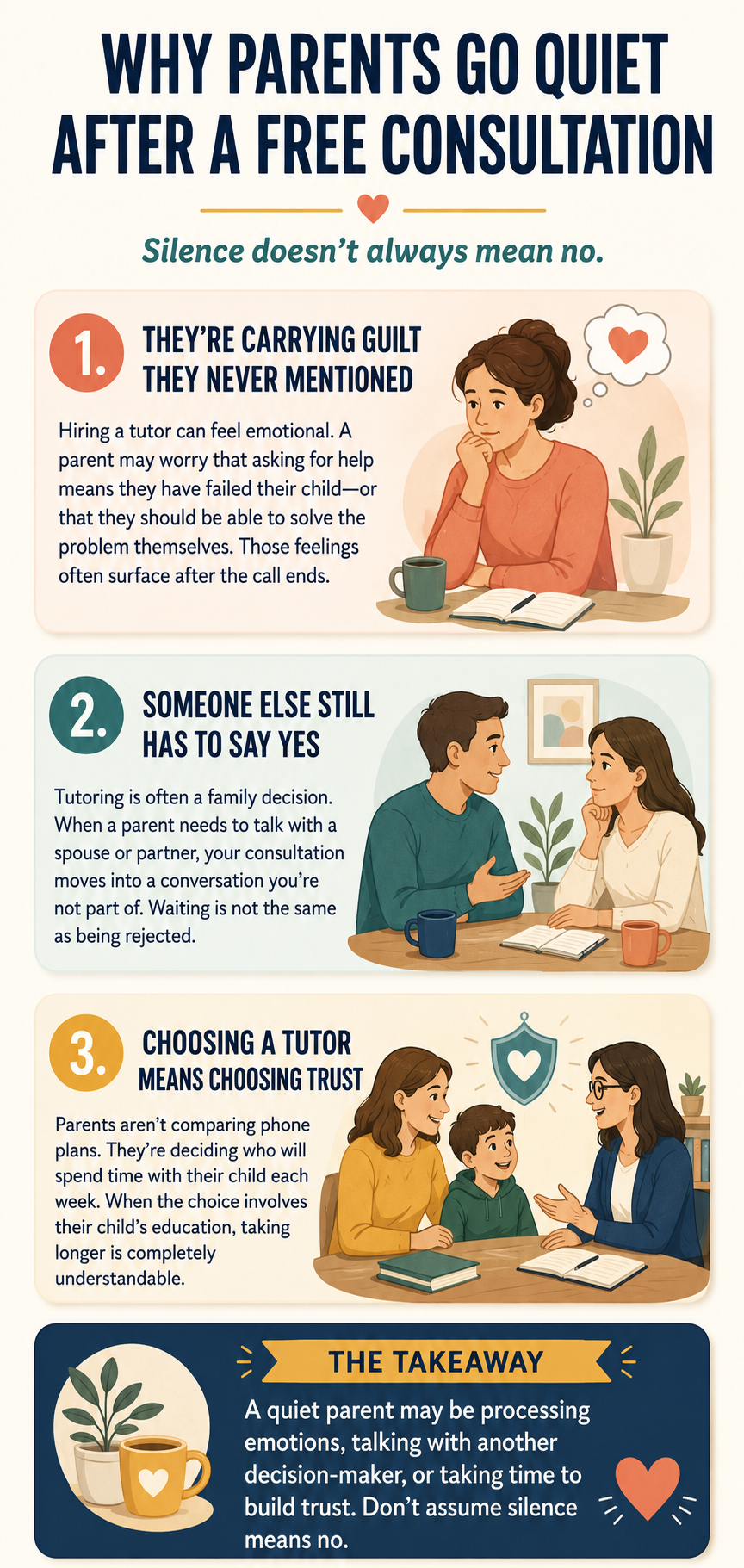
Most ghosting comes down to one of three hidden concerns.
How do you know which concern you're dealing with?
You can't read minds.
But how a parent goes quiet often gives you clues.
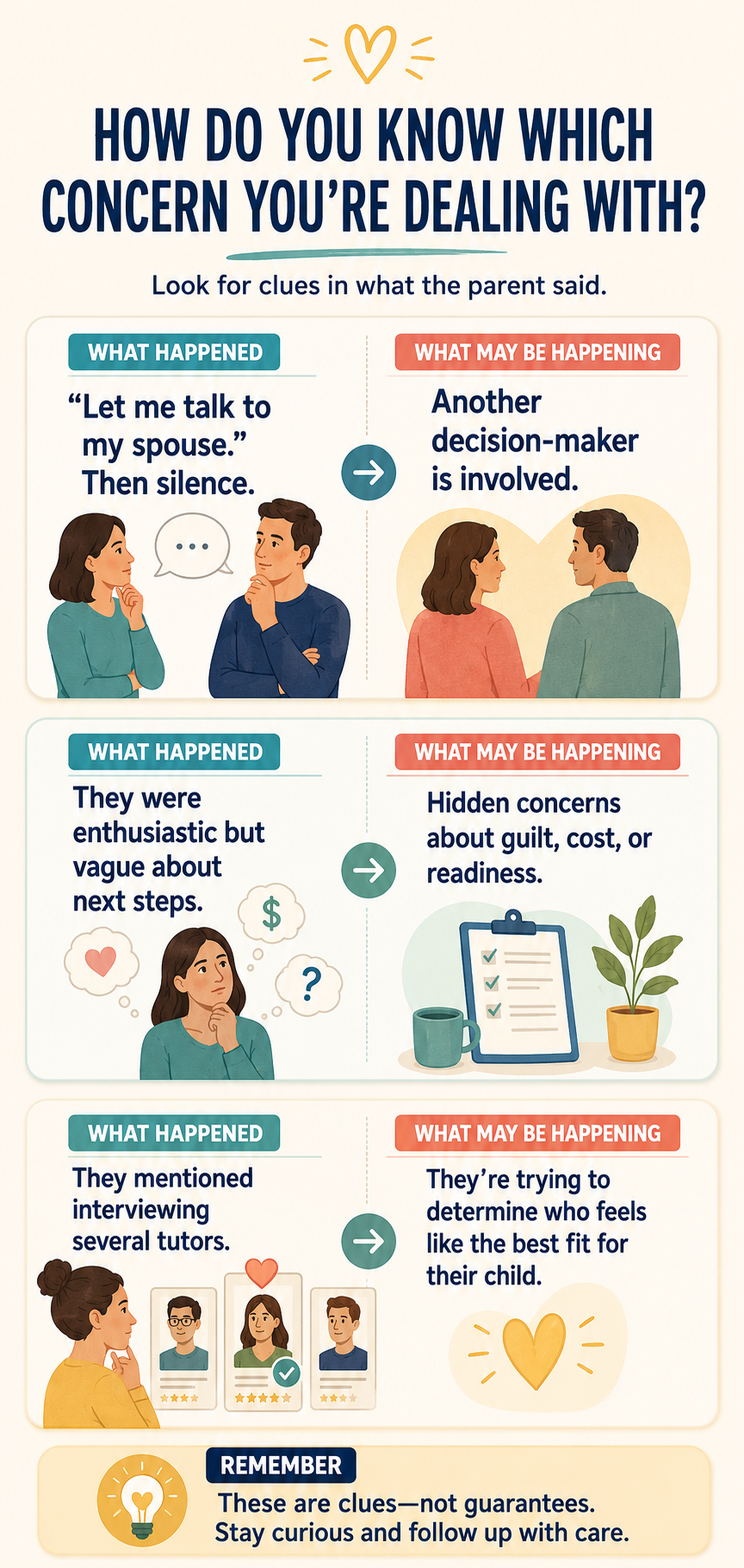
Notice that none of these automatically mean they're saying no.
What should you actually send instead of another "just checking in"?
Skip the generic follow-up.
One thoughtful, personalized message will almost always outperform three "just checking in" emails.
Make it easier to say yes from the very beginning
One small change that's made a surprisingly big difference in my own tutoring business is collecting the parent's payment information when they book their free consultation or assessment.
To be clear, I don't charge their card for the consultation or assessment.
I simply collect the card they'd like to use if they decide to move forward with tutoring.
That removes one more hurdle later.
If they decide to work with me, we don't have to interrupt the momentum by discussing invoices or payment details. Everything is already in place so we can focus on getting their child started.
I also avoid leaving scheduling until after they've made their decision.
Before the consultation ends, we discuss which days and times would work if they decide to begin tutoring.
We don't book lessons yet, but we identify the schedule that best fits their family.
That way, if they say yes, we're not starting another round of emails trying to coordinate calendars. We've already removed another obstacle between "yes" and their child's first lesson.
Write a follow-up that acknowledges what's really happening
When you do follow up:
Reference something specific from the consultation.
Mention their child's name, the subject they're struggling with, or a goal they shared.
It shows you were genuinely listening.
Gently acknowledge the likely concern.
For example:
"I completely understand if you're still talking everything over at home. If any questions have come up while you're deciding, I'm happy to help."
That feels supportive rather than salesy.
Give them one simple next step.
Don't overwhelm them with multiple options.
Invite them to reply with any questions or let you know whether they'd like to reserve one of the tutoring times you discussed.
Sometimes ghosting has nothing to do with you
One experience from my own tutoring business completely changed how I think about parents who disappear after a consultation.
I had a parent tell me she wanted to speak with her spouse before making a decision.
I sent one follow-up and then gave her some space.
Three weeks passed without hearing anything.
Like many tutors, I assumed she'd decided not to move forward.
Then I remembered we'd already been discussing possible tutoring times but had never actually finished that conversation.
I reached out one more time to ask whether she was still interested.
She replied almost immediately.
A family situation had come up that needed their full attention, and tutoring had understandably dropped to the bottom of their priority list.
She apologized for not getting back to me, explained what had happened, and said they were ready to begin tutoring that very week.
That experience taught me something important.
Sometimes silence isn't hesitation.
Sometimes it isn't an objection.
Sometimes life simply gets in the way.
That's why I no longer assume ghosting means rejection.
One thoughtful follow-up leaves the door open without creating pressure—and sometimes that's all a family needs.
The best way to prevent ghosting starts during the consultation
The best follow-up begins before the consultation ends.
Normalize the concerns parents often have.
You might say:
-
"Many parents like to discuss tutoring together before making a decision."
-
"It's completely normal to have questions after our conversation."
-
"Some parents feel guilty about hiring a tutor, but getting support isn't failing your child. Tutoring is giving them the help they need."
-
"If you decide to move forward, we've already identified tutoring times that should work for your family."
When you name the concern before it becomes an obstacle, it often loses its power.
That's why I think of ghosting differently now.
It's usually not rejection.
It's a signal that there's an unanswered question or an unspoken concern still sitting beneath the surface.
Frequently Asked Questions
Is it normal for parents to ghost after a free tutoring consultation?
Yes. It happens across many service businesses, including tutoring. Parents often go quiet because they're discussing the decision with a spouse, comparing tutors, or simply feeling overwhelmed—not because they disliked the consultation.
How many follow-ups should I send?
One or two thoughtful follow-ups are usually enough. A personalised message is far more effective than repeated "just checking in" emails.
Should I wait for parents to contact me?
No. Send one warm, specific follow-up that references your conversation and makes it easy for them to reply.
Do I need complicated email automation?
Not at all. Most tutors don't need elaborate sales funnels. One timely, personal follow-up usually works better than a lengthy automated sequence.
Final Thoughts
If parents stop responding after your consultations, don't immediately assume you've lost them.
More often than not, they've walked away carrying an unanswered concern rather than making a final decision.
When you identify those concerns, address them during the consultation, and follow up with empathy instead of pressure, you'll not only convert more enquiries—you'll build trust from the very beginning.
Remember, ghosting is often diagnostic, not rejection.
Download the Free Workbook
If ghosting after consultations has been slowing the growth of your tutoring business, improving your follow-up is only part of the solution.
Building a steady pipeline of enquiries makes every consultation less stressful and gives you more opportunities to help students.
Download my free workbook, 50+ Ways to Get Online Tutoring Students, and discover practical strategies for attracting more enquiries, building trust with parents, and growing your tutoring business.
About the Author
Joanne Kaminski is an online tutor, tutor business coach, Certified Reading Specialist, and Dyslexia Specialist with more than 26 years of experience in education. She has spent the last 16 years tutoring students online and the past 14 years helping tutors build thriving online tutoring businesses.
Through her coaching, Joanne has helped tutors attract more students, increase their income, and build businesses that allow them to do what they love most—teach and change students' lives.
Joanne believes there are countless children who need individualized support, and her mission is to help tutors connect with those families while creating sustainable, profitable tutoring businesses. She combines practical marketing strategies with real-world tutoring experience so tutors can confidently grow their student roster without relying on high-pressure sales tactics.
When she's not coaching tutors or working with students, Joanne creates resources, training, and videos to help tutors succeed online.
Learn more at onlinetutorcoach.com or subscribe to her YouTube channel at youtube.com/@joannekaminski.
Want to learn how to get students for your tutoring business?
Download 50 + Ways to Get Online Tutoring Students.
